EMT Practice Test

1. Question Content...


Question List

Question1: Which technique is commonly used to extract meaningful information from the measurement outcomes in quantum experiments?

Question2: How is the number of available quantum devices typically displayed in Qiskit?

Question3: What is the usual output of a quantum measurement on a single qubit?

Question4: Which gate is used to perform a controlled phase shift on a qubit, conditioned on the state of another qubit?

Question5: Which of the following missing statement return the depth of the following quantum circuit?
q = QuantumRegister(3)
c = ClassicalRegister(3)
qc = QuantumCircuit(q,c)
qc.h(q[0:3])
qc.x(q[0:3])
qc.z(q[0:3])
qc.draw(output='mpl')

### missing statement to return the depth of the circuit

Question6: Which of the following statement will return random hermitian operator of dimension 2?

Question7: Which tool is commonly used to simulate quantum circuits and execute experiments in a software environment?

Question8: Which of the following multi qubit-gate represents the controlled-z gate?

Question9: Which BasicAer simulator is commonly used to calculate the unitary matrix of a quantum circuit?

Question10: Predict the output of the average_gate_fidelity, process_fidelity of the below snippet:
a = Operator(XGate())
b = np.exp(1j /3) * a
average_gate_fidelity(a,b)
process_fiedlity(a,b)

Question11: What fundamental property of classical information is distinctly different in quantum information?

Question12: What is quantum entanglement?

Question13: Which coding snippet will create a quantum circuit with three quantum bits and three classical bits?

Question14: What is the result of CNOT(1/sqrt(2) (|10〉 + |11〉)) if the q1 qubit is the control and the q0 qubit is the target?

Question15: Which Qiskit function is used to display the capabilities and parameters of a specific backend?

Question16: What is the depth of the below quantum circuit?
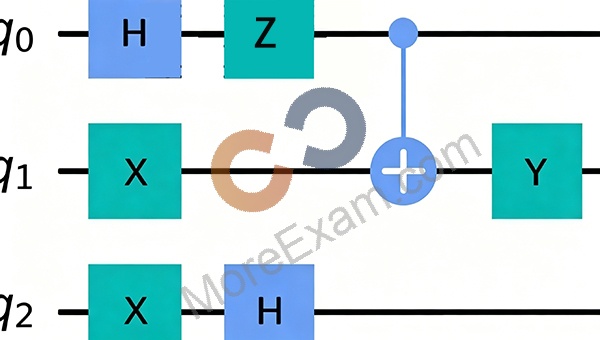
Question17: In the below QuantumCircuit, how many Qubits are there?
q1 = QuantumRegister(7, 'q1')
q2 = ClassicalRegister(2, 'q2')
q3 = QuantumRegister(5, 'q3')
qc = QuantumCircuit(q1, q2, q3)

Question18: In the circuit given below having unitary simulator as the backend, choose the
_missing_element_from the options?
qc = QuantumCircuit(1)
qc.h(0)
backend_unitary = BasicAer.get_backend('unitary_simulator')
result = execute(qc,backend_unitary).result()._missing_element_

Question19: Which BasicAer simulator is commonly used for ideal quantum simulations without noise?

Question20: In the Qiskit framework, which component is essential for studying and implementing methods to mitigate errors in quantum computation?

Question21: In the below QuantumCircuit, how many Qubits are there?
bob = QuantumRegister(8,'b')
alice = ClassicalRegister(2,'a')
eve = QuantumRegister(4,'e')
qc = QuantumCircuit(bob,alice,eve)

Question22: Which parameter in QuantumCircuit.execute function performs the optimization in the scale of no- optimization to highest optimization?

Question23: What code fragment codes the equivalent circuit if you remove the barrier in the following QuantumCircuit?

Question24: In quantum computing, what does the term "quantum supremacy" refer to?

Question25: When executing experiments on real quantum hardware, what is a significant challenge that simulators help address?

Question26: What is the output of the below snippet?
a = 1/np.sqrt(2)
desired_state = [a,np.sqrt(1-a**2)]
qc = QuantumCircuit(1)
qc.initialize(desired_state,0)
back_sv = BasicAer.get_backend('statevector_simulator')
result = execute(qc, back_sv).result()
qc_sv = result.get_statevector(qc)
state_fidelity(desired_state, qc_sv)

Question27: Which gate is typically used to reset a qubit's state to |0> in a quantum circuit?

Question28: Which Qiskit component is primarily focused on researching and improving quantum algorithms?

Question29: Which of the following returns process fidelity of a noisy quantum channel?

Question30: Which programming paradigm best aligns with Qasm in the context of quantum computing?

Question31: How are measurement results represented in quantum computing?

Question32: Which quantum computing language is commonly used to work with quantum circuits?

Question33: T-gate is a phase gate with what value of the phase?

Question34: We have a two-qubit quantum circuit q1, q0 What is the matrix representation of CNOT (q1, q0) in the given options below?

Question35: What is the fundamental principle behind quantum teleportation?

Question36: What information does the Bloch sphere visualization provide in quantum computing?

Question37: Which of the following options given below depicts the given bloch_vector plot?

Question38: Which type of error correction is more challenging in quantum information compared to classical information?

Question39: What would be the fidelity result(s) for these two operators, which differ only by global phase?
op_a = Operator(XGate())
op_b = numpy.exp(1j * 0.5) * Operator(XGate())

Question40: In Qasm, how are quantum gates and operations represented within a circuit?

Question41: Choose what value the below circuit will return?
q = QuantumRegister(2,'q')
qc = QuantumCircuit(q)
qc.h(q[0:2])

Question42: How is the controlled-RX gate different from the CNOT gate in a quantum circuit?

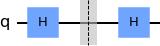
Question43: What is barrier instruction between the H-gates in the below quantum circuit do?
Question44: What role does "benchmarking" play in quantum experiments?

Question45: Given this code fragment, what is the probability that a measurement would result in |0>?
qc = QuantumCircuit(1)
qc.ry(3 * math.pi/4, 0)

Question46: Which Qiskit component provides access to the Aer provider for quantum simulation?

Question47: Which of the following is the best option to plot the|-> basis in plot_bloch_vector?

Question48: Which statement will create a quantum circuit with four quantum bits and four classical bits?

Question49: In the below code snippet, what is the probability of measuring |0>?
qc = QuantumCircuit(1)
qc.ry(3*math.pi/4, 0)

Question50: Which of the following is the best option to plot the |+> basis in plot_bloch_vector?
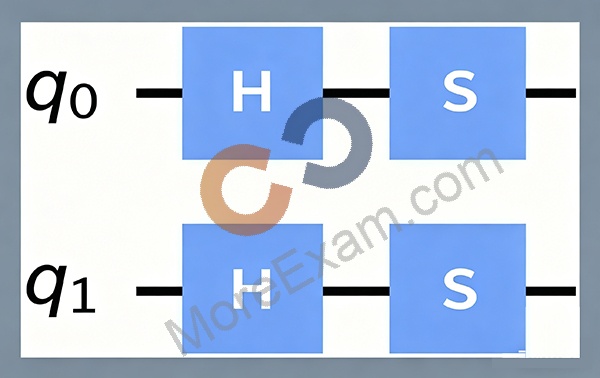
Question51: Which statement will combine the two given quantum circuits and result will be the final output?
q = QuantumRegister(2,'q')
qc1 = QuantumCircuit(q)
qc1.h(q[0:2])
qc1.s(q[0:2])
qc1.draw(output='mpl')
Quantum Circuit 1

q = QuantumRegister(2,'q')
qc2 = QuantumCircuit(q)
qc2.h(q[0:2])
qc2.x(q[0:2])
Quantum Circuit 2

Final output

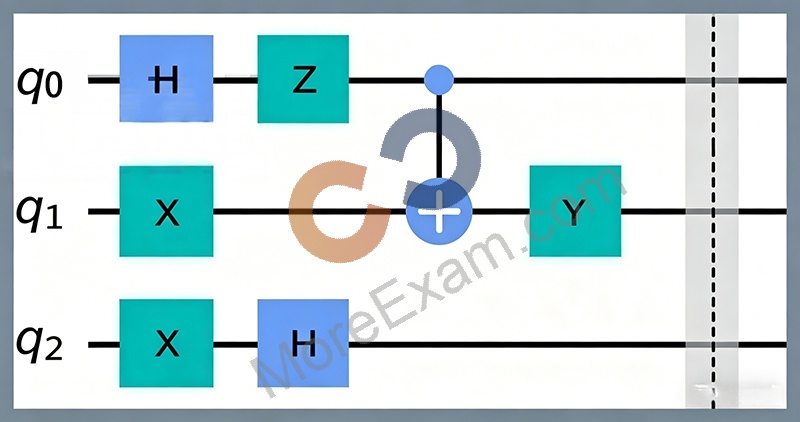
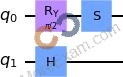
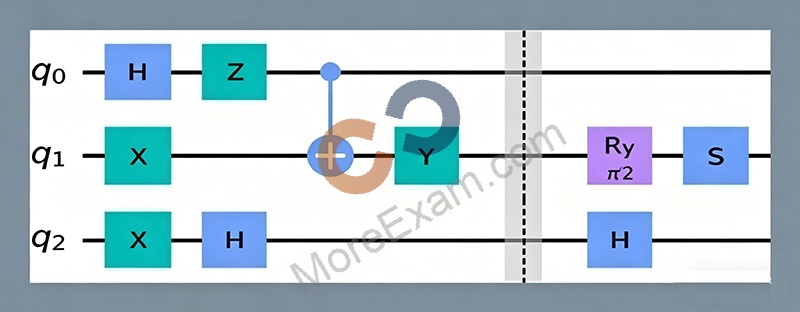
Question52: We have two quantum circuits snippets and figures shown below:
qc = QuantumCircuit(3)
qc.h(0)
qc.z(0)
qc.x(1)
qc.cx(0,1)
qc.y(1)
qc.x(2)
qc.h(2)
qc.barrier()
qc.draw(output='mpl')

qft = QuantumCircuit(2)
qft.ry(math.pi / 2, 0)
qft.s(0)
qft.h(1)
qft.draw(output='mpl')

Out of the below-mentioned options, which option suits best for getting the below output of the circuit new_qc?

Question53: Which of the following option describes the given quantum circuit below correctly in its state_city plot?
bell = QuantumCircuit(2)
bell.x(0)
bell.h(0)
bell.cx(0,1)

Question54: Which of the below option will implement an operator that represents a single qubit -gate?

Question55: Which of the following bloch_multivector plot options given below is the correct one for the given bell quantum circuit?
qc = QuantumCircuit(2)
qc.x(0)
qc.h(0)
qc.h(1)

Question56: Which quantum gate is used for creating superposition?

Question57: Which quantum gate is equivalent to classical NOT-gate?

Question58: What characteristic of quantum information poses a challenge to traditional cryptography systems?

Question59: Which code fragment will produce a multi-qubit gate other than a Toffoli?

Question60: Which kind of quantum simulation does the Aer provider primarily offer?

Question61: S-gate is a Qiskit phase gate with what value of the phase parameter?

Question62: Which code fragment will produce a multi-qubit gate other than a CNOT?

Question63: How does Qasm contribute to the execution of quantum circuits in simulators or actual quantum hardware?

Question64: What is the output of the result in the below snippet?
ghz = QuantumCircuit(3)
ghz.x(0)
ghz.h(0)
ghz.cx([0,0],[1,2])
ghz.measure_all()
backend_qasm = BasicAer.get_backend('qasm_simulator')
job = execute(ghz, backend_qasm,shots=1024)
result = job.result().get_counts()

Question65: Which of the below API returns the random unitary of dimension 2?

Question66: Given Quantum Circuit
qc= QuantumCircuit(2)
qc.h(0)
qc.cx(0,1)
to run the above quantum circuit for 2000 times in the qasm_simulator, choose the best option in the given below?

Question67: Which principle in quantum computing is violated by Bell's theorem?

Question68: Which quantum algorithm is primarily used for searching an unsorted database?

Question69: In quantum computing, what does a histogram of measurement outcomes represent?

Question70: What is the primary function of visualizations in quantum computing?

Question71: In the single-qubit quantum circuit, we apply the operators H, X, X, H, X in order, where X and H are Not and Hadamard operators respectively. (assume the qubit is initialized to |0>) What is the final state of the quantum circuit?

Question72: How does using BasicAer simulators differ from running experiments on actual quantum hardware?

Question73: Which Qiskit function is used to visualize the statevector of a quantum circuit?

Question74: Which one of the below is the noisy quantum circuit simulator backend?

Question75: What is the role of Qiskit Aer in the Qiskit framework?

Question76: Which of the following bloch_multivector plot options given below is the correct one for the given bell quantum circuit?
bell = QuantumCircuit(2)
bell.h(0)
bell.cx(0,1)

Question77: In the circuit given below having statevector simulator as the backend, choose the
_missing_element_from the options?
qc = QuantumCircuit(1)
qc.x(0)
qc.z(0)
backend_state = BasicAer.get_backend('statevector_simulator')
result = execute(qc,backend_state).result()._missing_element_

Question78: How does quantum teleportation differ from classical data transmission?

Question79: Which Python package provides BasicAer simulators in Qiskit?

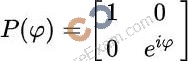
Question80: What is the equivalent phase of the phase gate when it is Z-gate?
Question81: How can the Aer provider's simulators be beneficial for users when experimenting with quantum algorithms?

Question82: Which of these would execute a circuit on a set of qubits which are coupled in a custom way?
from qiskit import QuantumCircuit, execute, BasicAer
backend = BasicAer.get_backend('qasm_simulator')
qc = QuantumCircuit(2)
# insert code here

Question83: What is the primary function of Qiskit Terra in quantum computing?

Question84: What will be the output for the below snippet?
q = QuantumRegister(2,"qreg")
c = ClassicalRegister(2,"creg")
qc = QuantumCircuit(q,c)
qc.x(q[0])
qc2.measure(q,c)
job = execute(qc2,Aer.get_backend('qasm_simulator'),shots=1024)
counts = job.result().get_counts(qc2)
print(counts)

Question85: Which of the below options should be used to plot the error map of a given backend?

Question86: Which statement will create a quantum circuit with five quantum bits and seven classical bits?

Question87: Which aspect of quantum circuits does Qasm primarily focus on?

Question88: What is the function of a quantum oracle in quantum algorithms?

Question89: Which line of code would assign a statevector simulator object to the variable backend?

Question90: What is the purpose of using Qasm in quantum computing?

Question91: In Qasm, what is the fundamental unit of operation in a quantum circuit called?

Question92: Given the following code, what is the depth of the circuit?
qc = QuantumCircuit(2, 2)
qc.h(0)
qc.barrier(0)
qc.cx(0,1)
qc.barrier([0,1])

Question93: When running experiments on quantum hardware, what is "calibration" in quantum computing?

Question94: What is the primary function of the Aer provider in Qiskit?

Question95: What is the primary advantage of running experiments on a quantum simulator over actual quantum hardware?

Question96: What information does the unitary_simulator provide for a quantum circuit?

Question97: Which one of the below statements is invalid when drawing the quantum circuit?

Question98: In the below code snippet, what is the probability of measuring |1>?
qc = QuantumCircuit(1)
qc.rx(3*math.pi/4, 0)

Question99: What is the significance of the no-cloning theorem in quantum computing?

Question100: Which quantum algorithm is commonly used to find factors of large composite numbers efficiently?

Question101: How does the storage of information differ between classical and quantum systems?

Question102: Predict the state vector output of the below quantum circuit?
qc= QuantumCircuit(3)
qc.h(0)
qc.z(0)
qc.x(1)
qc.cx(0,1)
qc.x(2)
qc.cx(1,2)
backend_sv = BasicAer.get_backend('statevector_simulator')
job = execute(qc, backend_sv,shots=1024)
result = job.result()
sv_ev = result.get_statevector(qc)

Question103: In the below quantum circuit, to measure the output of qubit which of the below will be used?
qc = QuantumCircuit(1)
qc.x(0)

Question104: In quantum computing, what is the primary method for retrieving results from a quantum experiment?

Question105: What Qiskit component enables simulation of quantum systems, including noise models and backends?

Question106: What is the function of a SWAP gate in a quantum circuit?

Question107: What is the output of the below snippet?
qc = QuantumCircuit(q, c)
qc.h(q)
qc.reset(q[0])
qc.measure(q, c)
job = execute(qc, backend, shots=1024)
job.result().get_counts(qc)

Question108: Which of the following commands will convert the below quantum circuit to qasm string?
qc = QuantumCircuit(2,2)
qc.h(0)
qc.h(1)

Question109: What is the command used to retrieve the last run job from a backend?

Question110: For the given quantum circuit, what is missing barrier instruction statements 1 & 2 below?
qc = QuantumCircuit(3)
qc.h(0)
qc.z(1)
qc.x(2)
# missing_statement_1
qc.cx(0,1)
qc.h(2)
# missing_statement_2
qc.draw(output='mpl')

Question111: Predict the output if the following famous GHZ-circuit is measured and simulated for 100 times?

Question112: What is the resultant gate when we apply three Hadamard gates (in series) in the single-qubit circuit?

Question113: What is the return type of the Qiskit Visualizations plots?

Question114: Which quantum gate is similar to classical NOT gate?

Question115: Which of the below option will implement an operator that represents single qubit Z-gate?

Question116: What function does Qiskit Aqua primarily serve within the Qiskit ecosystem?

Question117: If we have n qubits, how many states can we represent maximum?

Question118: What does the quantum operation SWAP do?